Statement of concern - "breach of the peace" powers used at Palestine rally
Action Ready’s Legal Observers have noticed an increase in police aggression and intimidation toward protestors at protests in solidarity with Palestine over the last year.
Justice for Palestine Magandjin (JFP) has a long track record of clearly advertising when its events are intended to be for everyone (ie there is no planned confrontation) and when there may be higher levels of police intervention (ie there is some element of deliberate confrontation). This is an important measure to ensure that as many people as possible can attend events that are within their comfort zone, as some people will be at a much higher risk from adverse police interactions than others. However, it is only effective when Queensland Police Service responds to protest events in a way that is reasonable and proportionate.
Increasingly, this is not the case. Sunday’s Global Day for Gaza rally in Magandjin (Brisbane) on 11 October 2026 was conducted in the same way as hundreds of JFP’s prior, peaceful and non-confrontational, rallies. As part of the Global Day for Gaza, the purpose of the rally was to bring together a broad cross-section of the community to recognise three years of ongoing genocide in Gaza.The crowd, as is usually the case at JFP rallies, was a blend of generations from young families to older people.
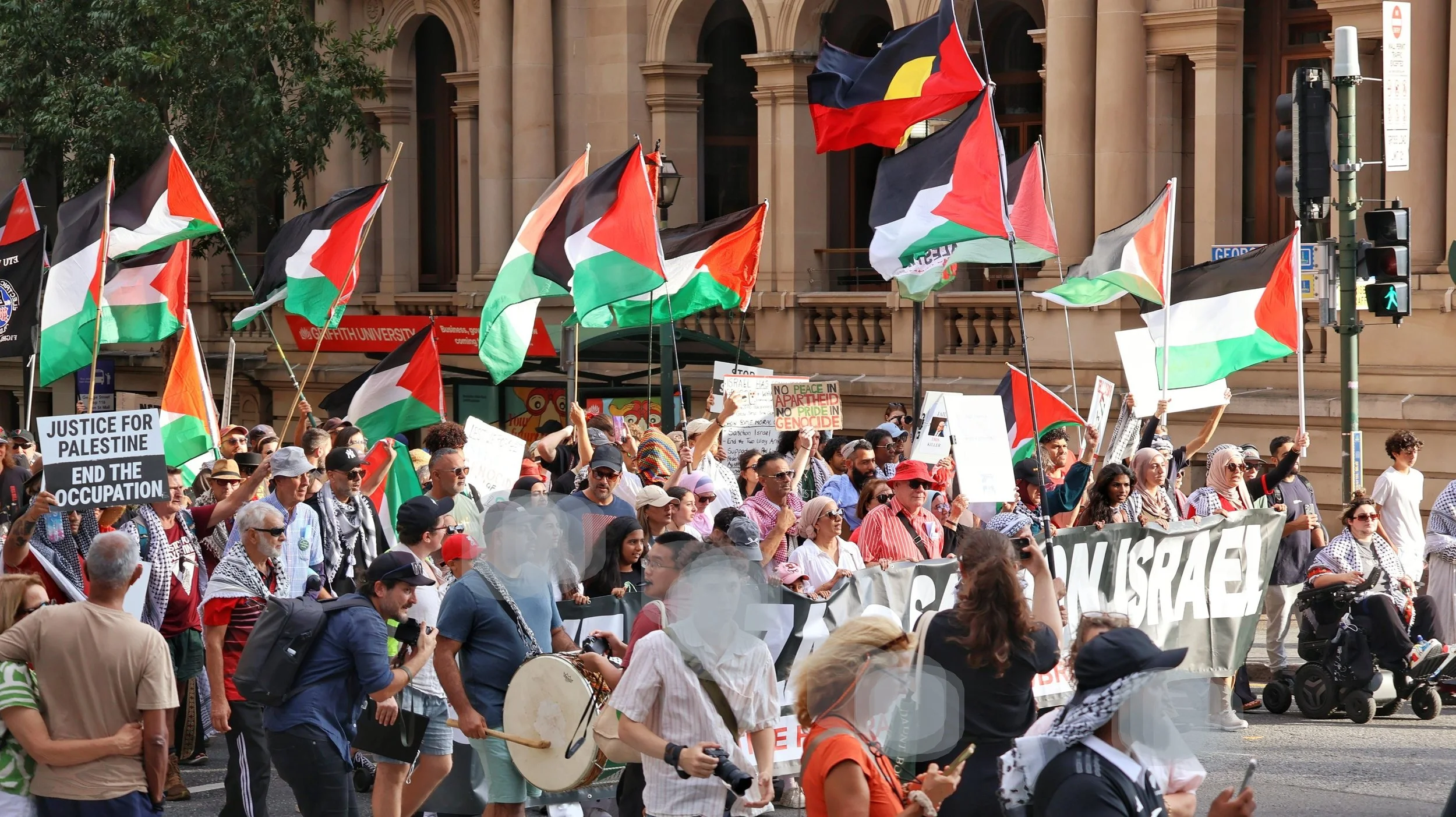
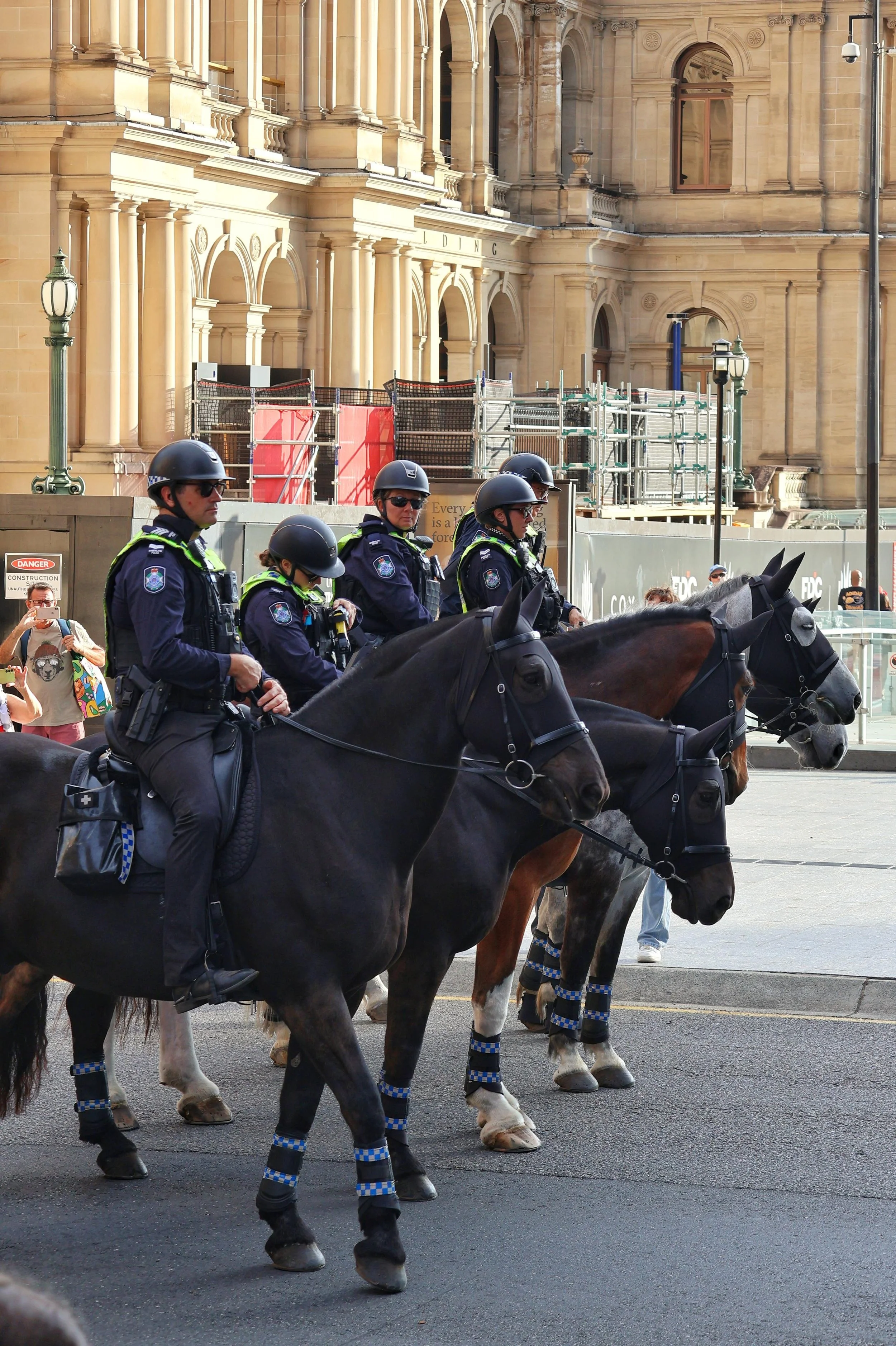
Legal Observers noted increased feelings of frustration and aggression directed from police toward protestors. Queensland Police Service attended with five mounted police and multiple Public Safety Response Teams (who typically conduct arrests or otherwise engage in physical crowd control tactics).
During the march, Legal Observers at the back of the march noted that the five mounted police were applying excessive pressure to protestors by leaving little space between them and the horses. Legal Observers also noted an officer on a motorbike travelling at excess speed along the footpath and yelling at people to move aside, despite there being no particular incident to respond to.
There were three arrests made in connection with the protest. One being an agitator who was pre-emptively arrested near King George Square as the rally was passing.
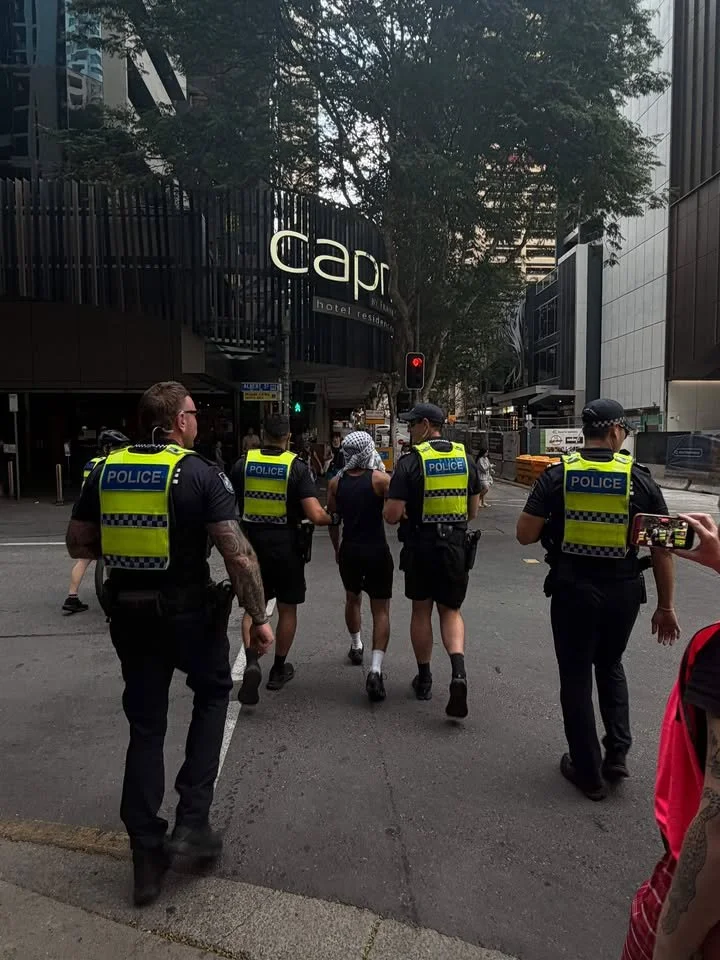
Police used “breach of the peace” powers in the second arrest, to detain a young person who was wearing a keffiyeh as a face covering. While we have previously observed police threatening to use these powers, this is the first time we have recorded their use by police to arrest someone.
Well before his arrest, Legal Observers noted that police were closely watching a group of four young people, including the young man who was detained, who were walking at the front of the march. Police asked them to either walk with the crowd or walk along the footpaths. Despite the group moving to the footpath and continuing along the march route from there, police continued to closely monitor their movements, even directing one young person back to the footpath with a hand on his back when he walked onto the street with the march.Once the crowd intersected with Albert Street, along Charlotte Street, two police officers grabbed the young person wearing a keffiyeh as a face covering and placed him under arrest, walking him down Albert Street and away from the rally. He lost his footing a few times as he was rushed down Albert Street, and the police officers continued to drag him by his arms.
It was not clear what cataylsed the young man’s arrest at this point. It appeared the timing was convenient because police could use the side street to separate him from the rest of the crowd. Legal Observers heard police explaining that he wasn’t being charged but that he was disturbing the peace. He was then searched and taken to the police station.
The young man was released around the time the march concluded at Queens Gardens and he reported to a Legal Observer that police had ripped his face covering off and that he had a sore arm from the way he’d been handled. He was not charged but police took photographs of him and repeatedly asked him if he knew why he was in the police station - we understand this to mean the police were attempting to illicit information they could use against him.
The third arrest was of a child who may have been carrying a sign displaying one of the prohibited expressions. Police arrested them as the rally concluded back at Queens Gardens, but subsequently released them around the corner.
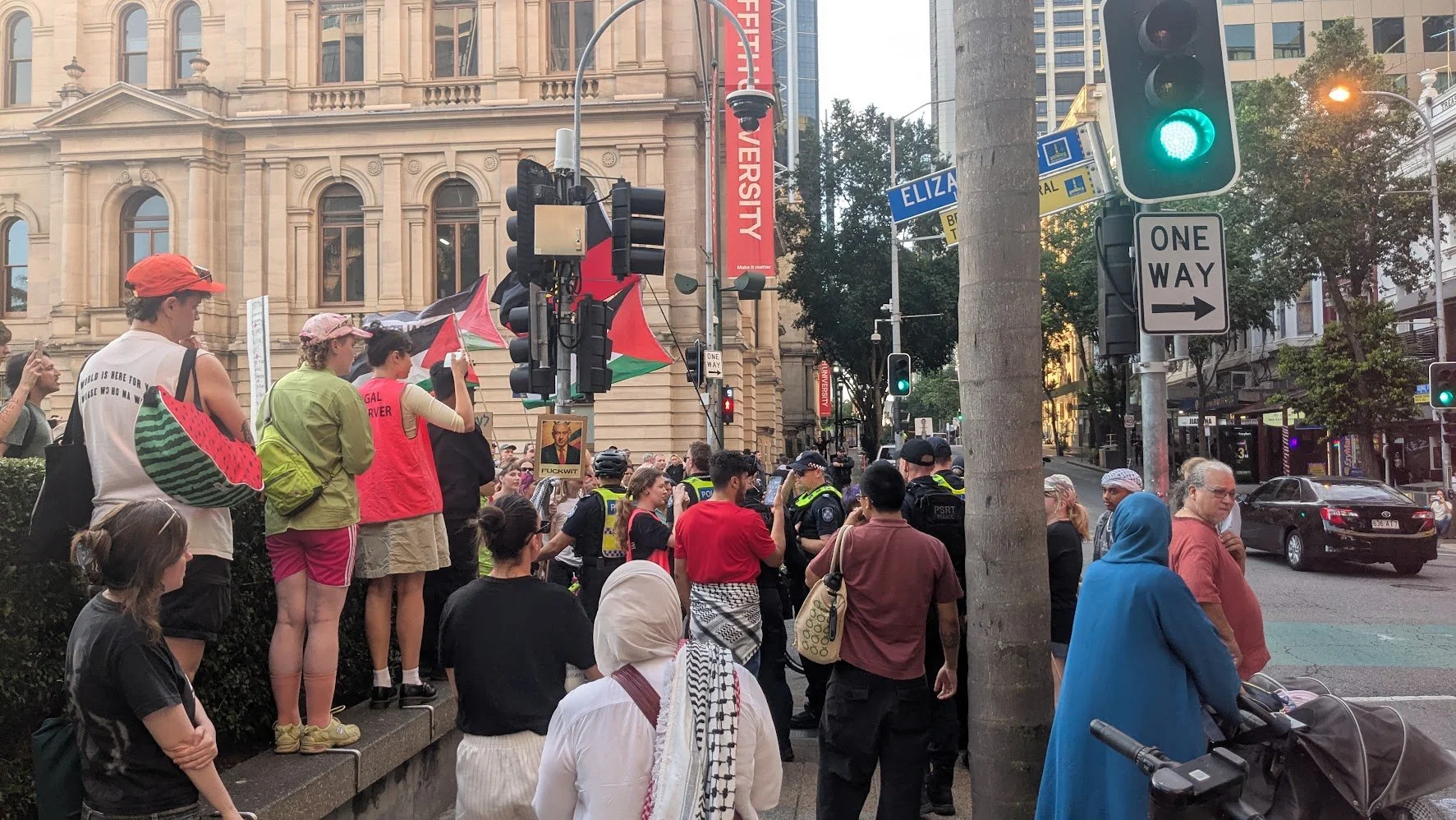
Officers surround a child on the corner of Elizabeth and George Street while people film, and another person attempts to leave the protest with a pram but is blocked in by police.
For your information -
Breach of the peace powers
Under the Police Powers and Responsibilities Act, if police reasonably suspect a “breach of the peace” has happened or is happening, police can take steps to prevent the breach of the peace continuing, even if the conduct is otherwise lawful. This includes allowing police to detain someone for a “reasonable time”.
“Breach of the peace” is not defined, and the only guidance we have about what this means is from outdated case law.
The use of these powers in a protest context signifies an escalation in police response in Queensland and should be cause for concern. It may also amount to an unlawful limitation on the rights to freedom of expression and peaceful assembly, among others.
Face coverings
It is not illegal to cover your face in Queensland - for example by wearing a face mask, a burqa or another face covering (like a keffiyeh) - unless you are doing so with intent to commit a serious offence.
Police can take identifying particulars, including photographs of your face or other identifying features, and in doing so may direct you to remove a face covering. However, police can only do this if you are being charged with an offence. Similarly, police might ask you to remove a face covering to confirm your identity, but only where they have a lawful reason to require your name and address.
Private premises may require the removal of face coverings as a condition of entry.